Great Salt Lake’s Hazy Forecast
Great Salt Lake dust storms aren’t something experts are warning could happen in the future, they are already here and impacting communities.
Dust from the exposed lakebed contains arsenic, PFAS, and other carcinogenic metals at levels that surpass federal safety recommendations. These storms are linked to asthma flare-ups, breathing difficulties, and could have long-term health impacts similar to disasters seen at other shrinking lakes around the world. We have previous cases, like Owens Lake in California, or the Aral Sea to turn to as examples of what will happen if we don’t immediately make high level changes to get water to the lake. A recent article on Owen’s Lake writes, “Owens Lake ran dry, exposing its toxic playa to neighboring communities and creating a lasting environmental crisis that’s still being resolved more than a century later. Now, scientists predict that it could worsen as global warming intensifies and natural resources dwindle.”
The Washington Post quoted Beth Parker, an environmental law professor at the University of Utah, “if the lake continues to decline, the livability of the region is on the line.” Despite this, Utah has only a handful of monitors tracking lake dust, far fewer than what’s needed for a lake this size. Even the state’s planned expansion of monitors will not meet federal standards, meaning Utah will not be compelled to take action even if hazardous levels are detected. Despite that, the EPA has no plans to monitor the dust on a federal level.
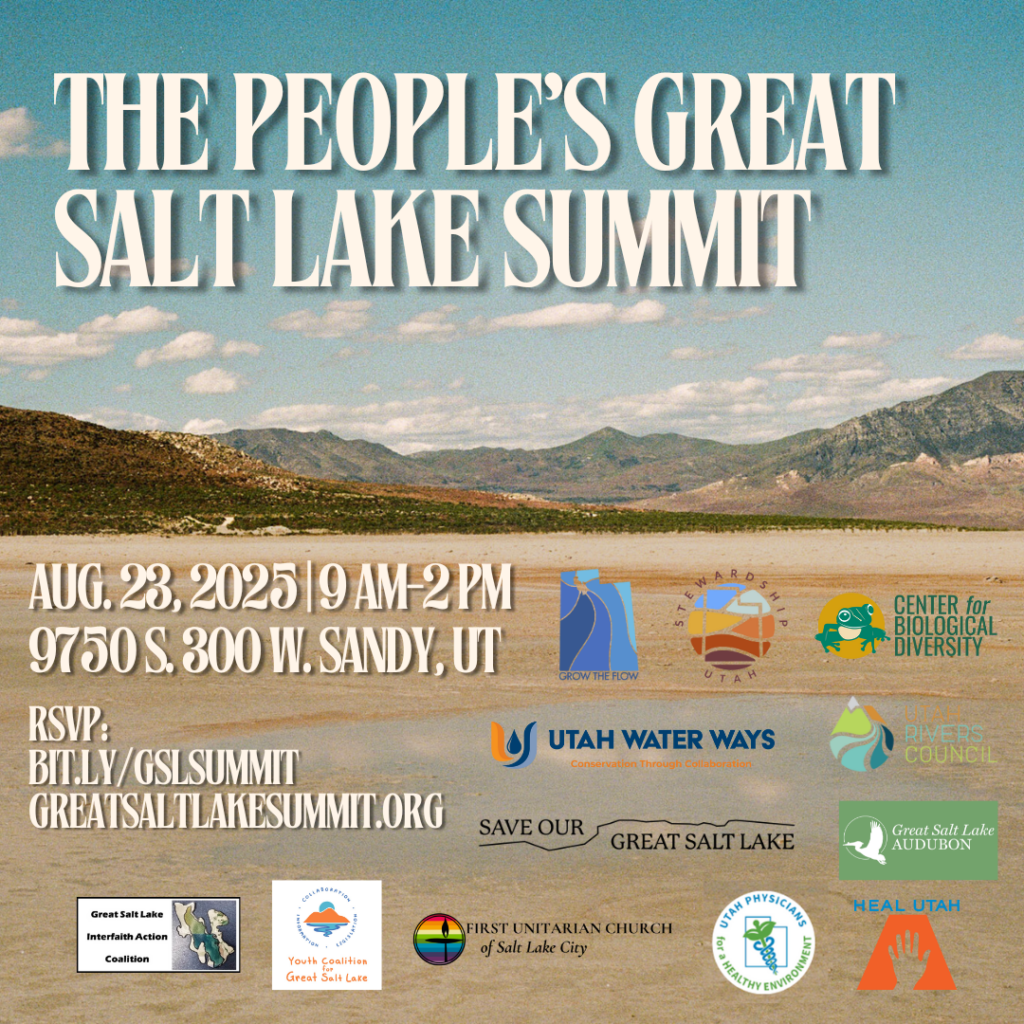
UPHE will be previewing a comprehensive dust report at the upcoming, free, People’s Great Salt Lake Summit, this weekend. This report includes an analysis of what’s in the dust and identifies issues with the state’s actions to address the lake.