
Gas pipeline proposal threatens Emigration Canyon
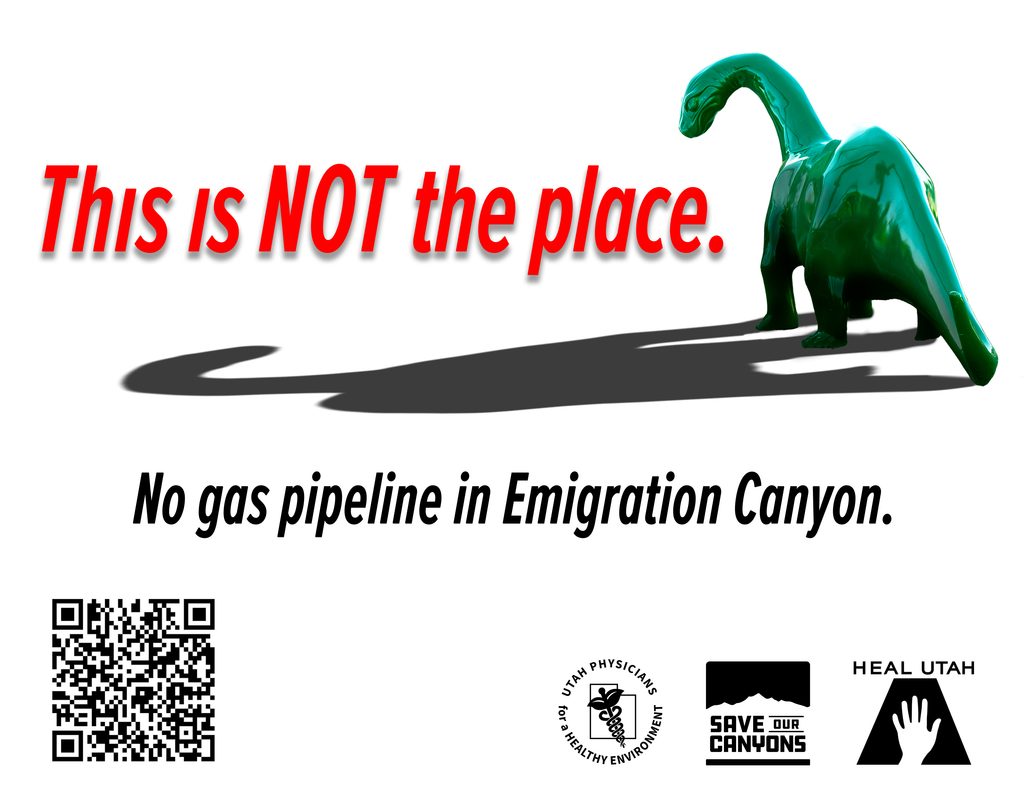
HF Sinclair is hoping to lay a 𝗴𝗮𝘀𝗼𝗹𝗶𝗻𝗲 𝗽𝗶𝗽𝗲𝗹𝗶𝗻𝗲 𝘁𝗵𝗿𝗼𝘂𝗴𝗵 𝘁𝗵𝗲 𝘄𝗮𝘁𝗲𝗿𝘀𝗵𝗲𝗱 𝗼𝗳 𝗣𝗮𝗿𝗹𝗲𝘆’𝘀 𝗮𝗻𝗱 𝗘𝗺𝗶𝗴𝗿𝗮𝘁𝗶𝗼𝗻 𝗖𝗮𝗻𝘆𝗼𝗻 𝘄𝗮𝘁𝗲𝗿𝘀𝗵𝗲𝗱, 𝗮𝗰𝗿𝗼𝘀𝘀 Salt Lake City’s 𝗲𝗮𝘀𝘁𝗲𝗿𝗻 𝗳𝗼𝗼𝘁𝗵𝗶𝗹𝗹𝘀 𝗮𝗻𝗱 𝗱𝗼𝘄𝗻 𝗶𝗻𝘁𝗼 𝗪𝗼𝗼𝗱𝘀 𝗖𝗿𝗼𝘀𝘀. All Salt Lake residents should be alarmed by this proposal.
The Parley’s/Emigration Canyon/Mountain Dell watershed provides drinking water for 𝗻𝗲𝗮𝗿𝗹𝘆 𝟰𝟬𝟬,𝟬𝟬𝟬 𝗿𝗲𝘀𝗶𝗱𝗲𝗻𝘁𝘀. About 𝟯𝟬𝟬 𝗘𝗺𝗶𝗴𝗿𝗮𝘁𝗶𝗼𝗻 𝗖𝗮𝗻𝘆𝗼𝗻 𝗵𝗼𝗺𝗲𝗼𝘄𝗻𝗲𝗿𝘀 𝗱𝗲𝗽𝗲𝗻𝗱 𝗲𝗻𝘁𝗶𝗿𝗲𝗹𝘆 𝗼𝗻 𝘄𝗲𝗹𝗹𝘀 𝗳𝗼𝗿 𝘁𝗵𝗲𝗶𝗿 𝘄𝗮𝘁𝗲𝗿. A pipeline leak could permanently contaminate these critical water resources.
After leaving the mountains, it would run along the Salt Lake City Foothills and punch through The Avenues, Capitol Hill, Marmalade, and Rose Park neighborhoods. The pipeline, dubbed Westline Connect, which would carry flammable, volatile refined gasoline, would be an even greater risk to our watershed, wildlands, and communities than existing crude oil lines.
On October 13, 2026 the Salt Lake City Council held an informational meeting where they said “there were no compelling benefits provided during the meeting.”
“I’m having a hard time thinking of a route that would hit more consequential sites than that,” Councilman Chris Wharton said during the meeting.

Voices: I’m a doctor living in Emigration Canyon. A proposed pipeline worries me.
– UPHE’s Vice President, Dr. Kirtly Parker Jones
HF Sinclair is planning to enlarge its Pioneer Pipeline which brings refined petroleum (gas and diesel) across Utah, according to The Salt Lake Tribune. The pipeline could carry more than 1 million gallons a day down Emigration Canyon as a part of their plan to serve Nevada’s gasoline needs.
Along with 1,500 people, I live in Emigration Canyon and have for 43 years. I am an OB-GYN and reproductive endocrinologist with a special interest in reproductive toxins in the environment.
Pipelines eventually leak. Many of us remember the oil spill in 2010 when a Chevron oil pipeline spilled 33,00 gallons of oil into Red Butte Creek and into Salt Lake City. Sixty six people filed suit against Chevron for harms from the oil spill. Two people claimed serious harms from conditions (pulmonary fibrosis and acute myelogenous leukemia) which are linked to petroleum exposure.
Refined petroleum leaks are even more hazardous than oil leaks. The health hazards of a large gas pipeline through a town are significant and, through Emigration Canyon, they are very significant.
The first immediate risk is fire. Emigration Canyon is in the wildland/urban interface, and fire is a very significant risk every year. Difficulties evacuating the canyon through a single road, smoke inhalation risks to residents and first responders, and immediate loss of homes are just a few risks.
A significant leak of fuels from the pipeline could cause inhalation of toxic gasolene fumes, which would gather at the bottom of the canyon. This could cause pulmonary damage, eye damage, and brain damage, to mention a few organ systems affected by gasoline fumes.
Gasoline and other refined petroleum easily and rapidly saturate and pass through the soil and rock that make up Emigration Canyon. They would rapidly contaminate groundwater and private wells. One gallon of spilled gasoline could contaminate 1 million gallons of water in a reservoir, as well as acres of soil, research shows. Refined petroleum includes toxic compounds including benzene and toluene and others that are linked to leukemia, lymphoma and other hematologic cancers.
Even if a leak was identified early and wells were turned off, those 300 homes with private wells — including mine — have no other source of water. It would render our homes uninhabitable.
A pipeline under the Emigration Canyon main road is a significant risk. According to the U.S. Pipeline and Hazardous Materials Safety Administration hazardous liquid accident data, accidents caused by outside parties digging into the line are a cause of spills, and spills are common. The Emigration Canyon main road is often excavated by various contractors to manage water pipelines at the top and the bottom of the canyon as well as natural gas and other resources along the canyon road. Of course, the pipeline would not end at the bottom of Emigration Canyon. It would continue on toward a zoo, a university, a medical center and private homes.
Before any pipeline route is approved through Emigration Canyon, the public deserves a straightforward answer to one question: Is this the lowest-risk reasonable alternative? That determination should be based on evidence — not assumptions — and should consider the risks to drinking water, emergency access, wildfire response, residents, property and the environment.
I see no upside for citizens of Utah, and there is significant risk for this large refined petroleum pipeline through Emigration Canyon and Salt Lake City. This is not the place.
No, this is NOT the place, for a pipeline
– UPHE’s Dr. Brian Moench in Utah News Dispatch
Emigration Canyon residents recently found surveyors for the oil company HF Sinclair poking around their yards. Sinclair wants to lay a new 12-inch gasoline pipeline through the canyon and foothills of Salt Lake City carrying up to 4 million gallons a day of gasoline and diesel.
Since 2010 the U.S. Pipeline and Hazardous Materials Safety Administration (PHMSA) has counted 9,329 fossil fuel pipeline leaking incidents, an average of at least 1.7 events per day. Even that official statistic is a vast underestimation, as Texas alone reports an average of nearly 30 pipeline leaks per day.
These statistics are not an abstraction or theoretical risk to long-time residents of Salt Lake City. In 2010, two oil spills six months apart from a Chevron pipeline rocked the city. In the first spill, 33,600 gallons of crude oil escaped from a half-inch hole in a 10-inch pipe and poured down Red Butte Creek, smothered Liberty Park Pond and continued into the Jordan River. Chevron did not respond to the leak for over 10 hours, and it took another 10 hours before they could get the pipeline shut down. The encore released 21,000 gallons of Chevron oil — same pipeline, same area.
People with homes on the creek were sickened by the toxic vapors and had multiple symptoms for years afterwards. In perhaps the most affected household, with the windows open that night, a teenager was taken to the ER with sudden blindness which lasted for several hours. In that same family, the father, previously healthy in his late 50s, died five years later of pulmonary fibrosis, almost certainly caused by the exposure. A healthy 40-year-old church groundskeeper who frequently worked near and in the creek for several years after the spill, came down with leukemia. Water sampling over a year later still found carcinogenic chemicals in some spots 400 times higher than the EPA’s “acceptable limits.”
People exposed to VOCs (volatile organic compounds) from oil spills show decreased lung function, more lung scarring, impaired heart and liver function, abnormal blood counts, and are plagued by chronic symptoms like headache, shortness of breath, skin rash, cough, fatigue, painful joints, and chest pain that can persist for years.
The most vulnerable targets are the brain, bone marrow, and chromosomes, damage that can be permanent. I’ve been an expert witness in litigation on behalf of several patients with severe neurologic impairment appearing after these exposures. The most heartbreaking are those involving children.
At least 150 toxic chemicals like benzene, ethyl benzene, toluene, and xylene (BTEX) are found in both crude oil and its refined products. Generally the chemicals in gasoline have smaller molecular weight, and therefore may be slightly less toxic to adults, but more toxic to a developing fetus. Benzene, the most well studied, is prominent in gasoline, diesel, and crude oil, and, as with other potent toxins like lead, there may be no safe level of exposure.
However, in the proposed pipeline location spilled gasoline is likely a greater hazard than crude oil. It penetrates soil and subsurface geologic formations more easily, increasing the risk of contaminating the well water that 300 Emigration homes depend on and the entire Parley’s Mountain Dell watershed serving nearly 400,000 people. Gasoline is far more flammable than oil and its vapor is explosive, adding greatly to fire risk in a canyon with only one exit road and an “extreme” fire risk rating.
Chevron dodged paying for a long-term health study of exposed Red Butte residents. Sinclair may enjoy even more immunity thanks to the Utah Legislature recently passing HB591 which prohibits common-law civil claims for public and private “nuisance,” a critical tool for plaintiffs suing companies for damage they cause.
Sinclair’s pipeline is intended to increase sales in Nevada and California. It is not to deliver more product to Utah, nor is that needed. Twenty-three percent of Utah’s refined products are shipped out of state and instate demand is projected to fall by at least 19% by 2054.
Much like Granite Construction relentlessly pursuing a new mine in Parley’s Canyon and dozens of tech companies forcing their AI data centers on communities all over the state, this is yet another example of a billion-dollar corporation force feeding Utahns from a trough of environmental gruel to fatten their own bottom line — socializing the risks and privatizing the profits.
Rather than fight for a paltry crumb of justice after the inevitable spill, Salt Lake City residents should demand that local and state officials protect their interests, not Sinclair’s. The eminent domain that Sinclair would like to invoke on property owners requires the pipeline be a “common good.” City officials need to understand it is the opposite. No, Emigration Canyon is not “the place” for a pipeline.